

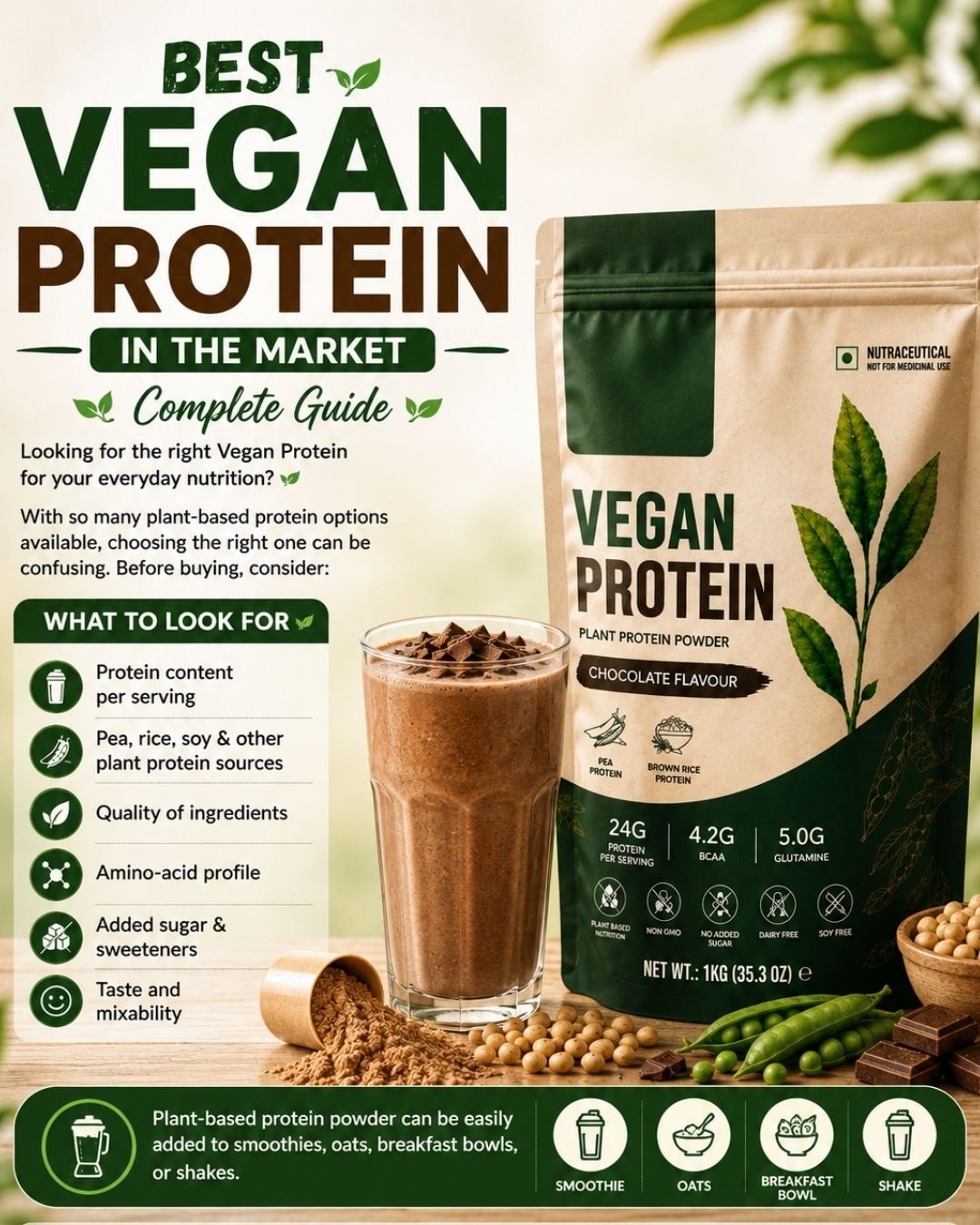
Best Vegan Protein in the Market: Complete Guide
Vegan Protein has become a popular choice for people looking for convenient plant-based nutrition. Whether you follow a vegan lifestyle, avoid dairy, or simply want to add more plant protein to your diet, a protein powder can be a practical option for everyday use.
With many products available in the market, choosing the right one can be confusing. Protein content, protein sources, amino-acid profile, ingredients, taste, serving size, and your personal nutrition goals should all be considered before making a decision.
What Is Vegan Protein?
Vegan protein is protein obtained from plant-based sources rather than animal-derived ingredients. Common sources include pea, brown rice, soy, hemp, pumpkin seed, and other plant proteins.
Different plant proteins have different nutritional characteristics. For example, pea and rice proteins are often combined because their amino-acid profiles can complement each other, while soy is a plant protein that can provide all essential amino acids on its own.
Benefits of Vegan Protein
Plant-Based Nutrition
Plant protein powder can be a convenient option for people following vegan, vegetarian, or plant-focused diets.
Dairy-Free Alternative
Unlike whey protein, plant-based protein products can provide a dairy-free alternative for people who prefer to avoid milk-derived protein.
Convenient Protein Source
A protein powder can easily be added to smoothies, oats, breakfast bowls, or shakes, making it convenient for busy lifestyles.
Different Protein Sources
Pea, rice, soy, hemp, and other plant proteins give consumers several options. Blended formulations can combine different protein sources to create a more balanced amino-acid profile.
How to Choose the Best Vegan Protein
There is no single product that is automatically the best for everyone. The right choice depends on your dietary preferences, nutrition goals, budget, and how well you tolerate the ingredients.
Check Protein Per Serving
Look at the actual protein content per serving instead of judging a product only by the size of its package.
Check the Protein Source
Look for clearly listed sources such as pea, rice, soy, hemp, or a combination of plant proteins.
Review the Amino-Acid Profile
Amino-acid composition is an important factor when comparing plant protein products. Pea and rice combinations are commonly used because their amino-acid profiles complement one another.
Read the Ingredient List
Check the complete ingredient list for sweeteners, flavours, additives, and other ingredients. Clear labelling makes it easier to compare products.
Check Added Sugar
If limiting added sugar is part of your nutrition goals, review the nutrition panel before purchasing.
Consider Taste and Mixability
A protein powder that tastes good and mixes easily with water or plant-based milk is more likely to become a consistent part of your routine.
Vegan Protein Powder vs Whey Protein
Whey protein is derived from milk, while plant protein powders are made from sources such as peas, rice, soy, or seeds.
The right option depends on individual dietary preferences and nutritional requirements. People following a vegan or dairy-free diet may prefer plant-based protein, while others may choose whey.
The important thing is to compare the nutritional profile and ingredients rather than assuming that one type is universally better.
Best Plant Protein Sources
Several plant sources are commonly used in protein supplements:
- Pea Protein: Popular in many plant-based protein powders.
- Brown Rice Protein: Often combined with pea protein.
- Soy Protein: A complete plant protein source.
- Hemp Protein: Provides protein along with other nutrients.
- Pumpkin Seed Protein: Another plant-based option used in some blends.
Current Indian protein guides commonly compare pea, rice, soy, hemp, and blended formulations when evaluating plant-based protein powders.
Who Can Use Plant-Based Protein Powder?
Plant-based protein powder may be useful for people who:
- Follow a vegan or vegetarian diet.
- Prefer dairy-free nutrition.
- Have an active lifestyle.
- Want a convenient protein source.
- Need an easy way to supplement their daily protein intake.
Protein requirements vary from person to person, so supplements should be considered as part of an overall balanced diet rather than as a replacement for nutritious whole foods.
How to Use Vegan Protein Powder
There are several simple ways to add plant protein powder to your routine:
- Mix it with water or plant-based milk.
- Add it to a fruit smoothie.
- Mix it into oats.
- Add it to a breakfast bowl.
- Prepare a post-workout shake.
- Use it in homemade protein recipes.
Always follow the serving instructions provided on the product label.
Frequently Asked Questions
Is Vegan Protein Good for Daily Nutrition?
Plant-based protein powder can be a convenient addition to a balanced diet when it fits your individual nutritional needs.
Which Plant Protein Is Best?
There is no universal answer. Pea, rice, soy, hemp, and blended proteins each have different characteristics. Your dietary preferences, nutrition goals, ingredients, and budget should guide your choice.
Is Plant Protein Better Than Whey?
Neither is automatically better for everyone. Plant protein can be a useful option for people who prefer vegan or dairy-free nutrition, while whey is a milk-derived protein.
Can Plant Protein Be Used After a Workout?
Yes. Many people use a plant-based protein shake after exercise as a convenient way to add protein to their daily diet.
Final Thoughts
Choosing the Best Vegan Protein in the Market requires looking beyond advertising claims. Compare protein content, protein sources, amino-acid profile, ingredients, added sugar, taste, and serving size before making a decision.
A suitable plant-based protein powder can be a convenient addition to a balanced diet and active lifestyle. Choose a product that matches your personal nutrition needs rather than simply choosing the most popular option.