

Introduction
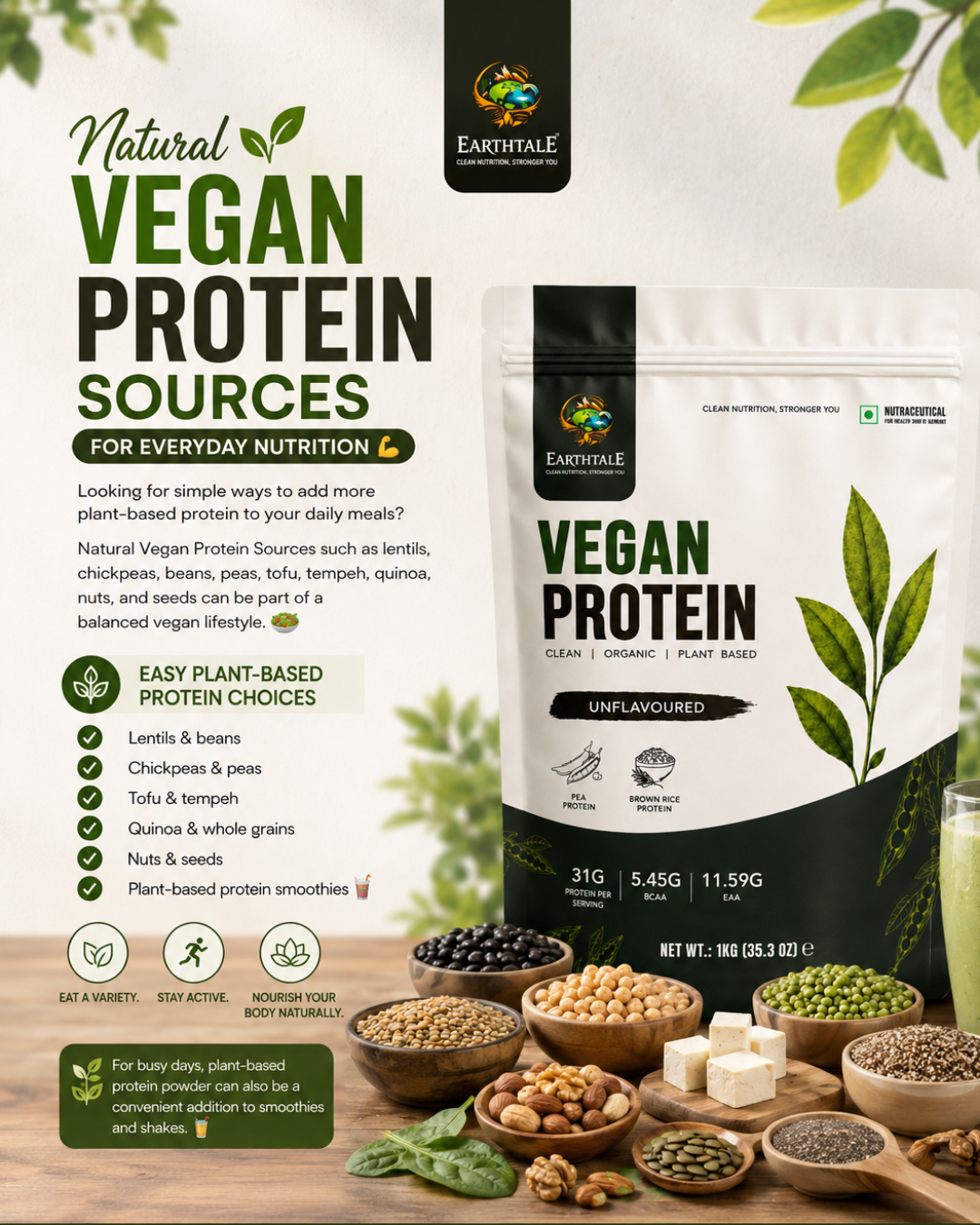
Natural Vegan Protein Sources can make it easier to build a balanced plant-based diet. Foods such as lentils, beans, peas, tofu, tempeh, nuts, seeds, quinoa, and whole grains can contribute protein along with other important nutrients.
Protein is an essential nutrient involved in maintaining and repairing body tissues. Harvard’s Nutrition Source recommends including a variety of plant-based protein foods such as legumes, nuts, seeds, whole grains, and soy foods.
Whether you follow a vegan lifestyle, are reducing animal products, or simply want more variety in your meals, choosing different plant foods throughout the day can help you create nutritious meals.
What Are Natural Vegan Protein Sources?
Natural vegan protein sources are minimally processed or whole plant foods that naturally provide protein.
Some popular options include:
- Lentils
- Chickpeas
- Black beans
- Kidney beans
- Green peas
- Soybeans
- Tofu
- Tempeh
- Edamame
- Quinoa
- Almonds
- Peanuts
- Pumpkin seeds
- Chia seeds
- Hemp seeds
- Oats
Legumes such as beans, lentils, and peas are particularly useful because they provide protein along with nutrients such as fiber, folate, iron, and other minerals.
Best Natural Vegan Protein Sources to Add to Your Diet
1. Lentils
Lentils are a versatile plant food that can be used in curries, soups, salads, dals, and bowls. They provide protein and fiber, making them a convenient ingredient for everyday meals.
Harvard’s Nutrition Source notes that a cup of cooked lentils provides about 18 grams of protein and 15 grams of fiber.
2. Chickpeas
Chickpeas are another versatile legume. You can use them in hummus, salads, curries, roasted snacks, and grain bowls.
They can be especially useful for people who want to increase the variety of plant foods in their meals.
3. Beans
Black beans, kidney beans, pinto beans, mung beans, and other varieties can contribute protein and fiber to a plant-based diet.
Try adding beans to:
- Rice bowls
- Wraps
- Salads
- Soups
- Curries
- Homemade burgers
4. Tofu and Tempeh
Tofu and tempeh are soy-based foods that can be used in a wide range of recipes. Soy is also considered a complete plant protein because it contains all nine essential amino acids.
You can add tofu to stir-fries, curries, sandwiches, salads, and bowls. Tempeh can be grilled, baked, sautéed, or added to wraps.
5. Nuts and Seeds
Nuts and seeds provide protein along with fats and other nutrients.
Good options include:
- Almonds
- Peanuts
- Walnuts
- Pumpkin seeds
- Sunflower seeds
- Chia seeds
- Hemp seeds
- Flax seeds
Harvard Health notes that nuts and seeds provide protein, fiber, healthy unsaturated fats, vitamins, and minerals.
6. Quinoa
Quinoa is a grain-like food that can be used as an alternative to rice or added to salads and bowls.
It is also considered a complete plant protein and provides fiber and minerals.
7. Peas
Peas are another convenient plant protein food. They can be added to rice, pasta, soups, curries, salads, and other meals.
Peas are also used as an ingredient in many plant-based protein powders.
Why Variety Matters in a Vegan Diet
Eating a variety of plant foods is an important part of a balanced vegan diet.
Different plant foods provide different combinations of amino acids and nutrients. Harvard recommends varying plant protein sources, including legumes, soy foods, nuts, seeds, and whole grains.
For example, you could combine:
Breakfast: Oats + chia seeds + peanut butter
Lunch: Lentil dal + rice + vegetables
Snack: Hummus + whole-grain bread
Dinner: Tofu + quinoa + vegetables
This approach gives you multiple sources of plant-based protein throughout the day.
Natural Vegan Protein Sources for Fitness
People with active lifestyles may pay particular attention to protein intake because exercise and recovery increase the importance of adequate nutrition.
Instead of depending on just one food, build meals around a variety of protein-containing plant foods.
For example:
Pre-workout meal: Oats + banana + peanut butter
Post-workout meal: Tofu + rice + vegetables
Snack: Plant-based protein smoothie
Dinner: Lentils + quinoa + vegetables
Individual protein requirements can vary depending on factors such as age, body size, activity level, and overall diet, so people with specific nutritional goals may benefit from advice from a qualified dietitian.
How to Add More Plant Protein to Everyday Meals
Increasing plant protein does not have to mean completely changing your diet.
Try these simple ideas:
Add legumes to meals
Include lentils, chickpeas, peas, or beans in curries, soups, salads, and bowls.
Add seeds to breakfast
Sprinkle chia, hemp, pumpkin, or flax seeds over oats, smoothies, or yogurt alternatives.
Choose soy foods
Tofu, tempeh, and edamame can add variety to lunch and dinner.
Use protein-rich smoothies
A smoothie can combine fruits, oats, seeds, and a plant-based protein powder.
Mix different plant foods
Combining legumes, grains, nuts, and seeds throughout the day creates a varied plant-based eating pattern.
Plant Protein Powder as a Convenient Option
Whole foods can form the foundation of a plant-based diet, but protein powder can also be a convenient option when you need something quick.
Earthtale Vegan plant protein can be added to smoothies and shakes as part of an everyday plant-based nutrition routine.
For product information, ingredients, serving information, and suitability, always check the product label and follow the manufacturer’s directions.
How to Choose a Plant Protein Product
When choosing a plant protein powder, check:
- Protein amount per serving
- Ingredient list
- Serving size
- Added sugars
- Allergens
- Flavor and sweeteners
- Directions for use
- Manufacturer information
Harvard Health also recommends reading nutrition and ingredient labels when choosing protein powders because products can contain additional ingredients such as sweeteners, thickeners, vitamins, and minerals.
Simple Vegan Protein Meal Ideas
Here are some easy combinations:
| Meal | Protein Options |
|---|---|
| Breakfast | Oats + chia + peanut butter |
| Lunch | Lentils + rice + vegetables |
| Snack | Hummus + whole-grain crackers |
| Smoothie | Plant protein + fruit + oats |
| Dinner | Tofu + quinoa + vegetables |
| Evening snack | Roasted chickpeas |
The goal is not to rely on one ingredient. A varied plant-based diet can provide protein from many different foods.
Frequently Asked Questions
What are the best natural vegan protein sources?
Some useful options include lentils, beans, chickpeas, peas, tofu, tempeh, edamame, quinoa, nuts, and seeds.
Are plant foods enough for protein?
A well-planned vegan diet can include protein from a wide range of plant foods. Variety is important because different foods provide different nutrients and amino-acid profiles.
Is tofu a good vegan protein source?
Yes. Tofu is a soy-based food that provides protein and can be used in many different meals. Soy is considered a complete plant protein.
Can vegan protein help with fitness?
Protein is important for maintaining and repairing body tissues. People who exercise regularly should consider their overall protein intake alongside their training and total diet.
Conclusion
Choosing Natural Vegan Protein Sources can make a plant-based diet more varied and nutritious. Lentils, beans, chickpeas, peas, tofu, tempeh, quinoa, nuts, and seeds are practical options that can be incorporated into everyday meals.
For people who need additional convenience, plant-based protein powder can complement a varied diet.
The key is variety, balanced meals, and choosing foods that fit your individual nutritional needs.
Earthtale Vegan – Plant-Based Nutrition for Everyday Wellness.
Contact No
9780606325
Infoearthtale@gmail.com